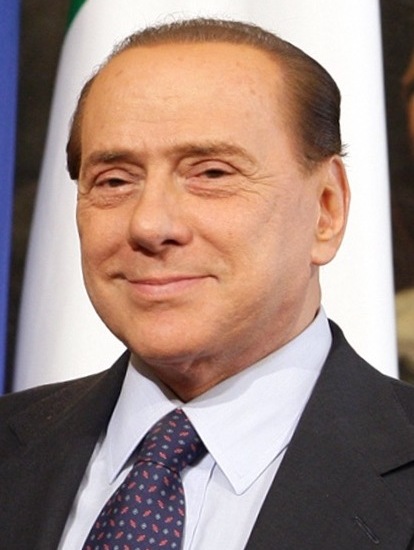
The President of the Council of Ministers (Italian: Presidente del Consiglio dei Ministri), usually referred to in English as the prime minister of Italy, is the head of government of the Italian Republic. The formal Italian order of precedence lists the office as being ceremonially the fourth most important Italian state office, although in practice the prime minister is the most powerful, and thus de facto, leader of the Italian government.
While the office is similar to those in most other parliamentary systems, the Italian prime minister has less authority than some of his counterparts. The prime minister is not authorized to request the dissolution of the Parliament of Italy or to dismiss ministers, and must receive a vote of approval from the Council of Ministers—which holds effective executive power—to execute most political activities.
The office was established by Articles 92 through to 96 of the current Constitution of Italy. The prime minister is appointed by the President of the Republic after each general election. The formal title of the office holder is Presidente del Consiglio dei Ministri; the Italian word for "prime minister" is primo ministro.

No comments:
Post a Comment